Why the species ID matters before any treatment starts
Roof rats live up high. In attics. In roof voids. In trees.
Norway rats are bigger. Brown. Heavy. Short tail.
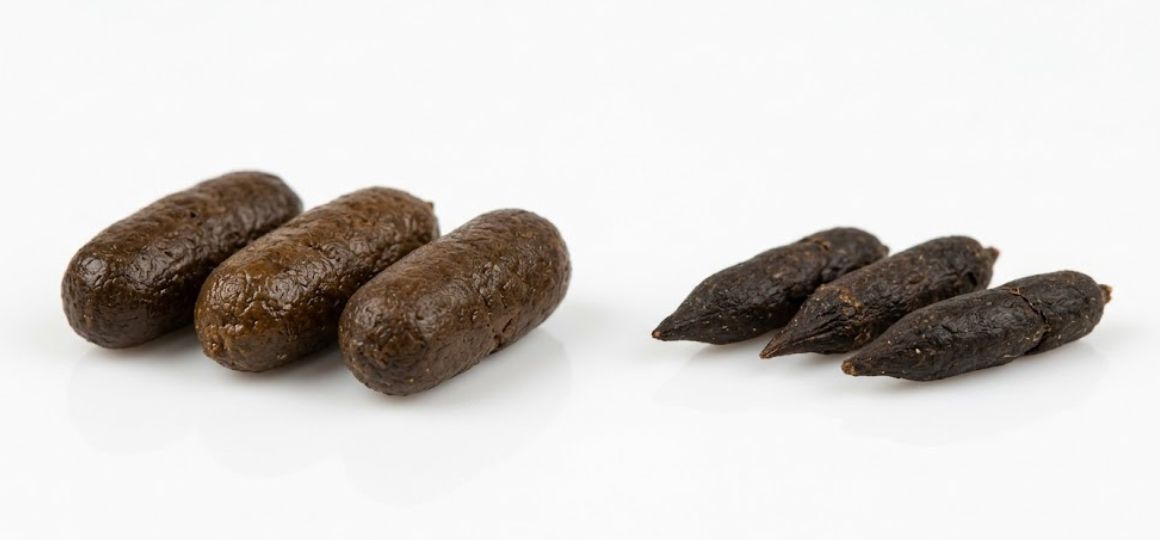
Real differences, size, shape, color, and droppings
Roof rats are smaller. Black or brown. Long tail. Pointed snout.
Norway rats eat anything. Garbage. Pet food. Compost.
Roof rats prefer fruit, nuts, and seeds. They like canopy trees.
Behavioral differences, where they live, how they move
Norway rats die in walls or yards. Roof rats die in attics.
Sealing differs. Norway: foundation rims, vent screens. Roof: soffit gaps, gable vents.
Both need trapping and sealing. Most rodent calls close with one site visit and one return check.
Entry-point differences, what you're looking for at your Greensboro home
Norway rat entry concentrates at or below grade, crawl-space vent screens, sill-plate gaps at the wood-to-concrete transition, pipe penetrations through the foundation wall, and gaps at the crawl-space access door. If you're finding droppings in the crawl space and your foundation vent screens are corroded or missing, that's your answer.
Roof rat entry concentrates at the roofline, gable vents, soffit-return gaps, ridge-vent openings, and plumbing stack penetrations through the roof plane. In Greensboro's canopy-dense neighborhoods, Irving Park, Fisher Park, Sunset Hills, Latham Park. Any tree limb touching or overhanging the roofline is the delivery mechanism that gets roof rats to those entry points.
The practical implication: Norway rat sealing is done from the foundation up. Roof rat sealing is done from the roofline down. A general "seal everything" method without knowing which species you're addressing may miss the relevant zone entirely.
Seasonal pressure patterns in Greensboro, when each species peaks
Norway rats in Greensboro are active year-round. But peak work periods for household entry are fall (September-November) as outdoor food sources decline, and after large rain events that disturb storm-drain systems and push resident drain colonies toward the structures above.
Roof rats peak in September-December across Greensboro's canopy neighborhoods. This window combines the year's highest group levels from spring and summer breeding with cooling temperatures that make warm attic refuges attractive. The most common roof-rat call we handle, "I started hearing scratching in the ceiling in October", tracks this pattern precisely.
If you're in a canopy-adjacent Greensboro neighborhood and hearing ceiling work in the fall, it's a roof-rat call until proven otherwise. If you're in a crawl-space neighborhood like Aycock or Westerwood and finding evidence below grade, that's Norway rat territory. The season and the spots together narrow the ID much before an inspector even arrives.
Side-by-side comparison: Norway rat versus roof rat
Bringing together all the ID and behavioral details into one comparison view:
| Characteristic | Norway rat (Rattus norvegicus) | Roof rat (Rattus rattus) |
|---|---|---|
| Body length | 7-10 inches | 6-8 inches |
| Tail vs body | Shorter than body, thick at base | Longer than body, thin and whip-like |
| Body shape | Heavy, solid, blunt-nosed | Slim, lithe, pointed-nosed |
| Ears | Small, do not reach eyes when folded forward | Large, reach or pass eyes when folded forward |
| Adult weight | 10-17 ounces | 5-10 ounces |
| Droppings | 3/4 inch, blunt ends | 1/2 inch, pointed ends |
| Primary habitat zone | Ground-level, burrows, crawl spaces, sewers | Elevated, canopy, attics, upper walls |
| Climbing ability | Capable but prefers ground; ground-foraging | Excellent; primary travel mode is climbing |
| Entry point altitude | Foundation level, vents, sill plates, pipes | Roofline, gable vents, soffits, eave gaps |
| Greensboro neighborhoods most common | Aycock, Glenwood, College Hill (older crawl-space stock) | Irving Park, Fisher Park, Sunset Hills (mature canopy) |
| Peak pressure months | September-March | Year-round, October-February peak |
| Trap type | Heavy-duty rat snap trap, ground-level placement | Rat snap trap, attic and elevated placement |
How the same home can host both species, and why programs run in parallel
In Greensboro's heritage neighborhoods, mostly Fisher Park, Sunset Hills, and parts of Irving Park, it's common to find both Norway rats and roof rats active in the same home at the same time. The frame state that drive each group are independent, so the two species occupy different zones without competing.
Norway rats set up in the crawl space, the foundation has aged vent screens. The sill plate has settled gaps, the warm under-floor spot gives shelter and the kitchen above gives food access. Roof rats set up in the attic, the soffit returns have separated from fascia, the gable vents have rusted screens, and the mature oak canopy gives direct limb access to the roofline. Neither group is aware of or competes with the other. They share the frame on different floors.
Programs for these dual infestations run on parallel tracks. The crawl-space program, Norway-rat-sized snap traps positioned along foundation walls, edge bait stations addressing the burrow group, foundation-level sealing, runs on its own plan. The attic program, rat snap traps positioned along joist runs, gable-vent and soffit-return sealing. Canopy-contact checks for limb trimming, runs on its own plan at once. The two programs are independent in technique but lined up in timing, often running 4-6 weeks total.
This is why getting the species ID right matters before jobs starts. If we go into a dual-infestation home thinking it's Norway-rat-only, we'd seal the foundation, wipe out the crawl-space group, and the homeowner would still hear roof rats running in the attic three weeks later, and the bill for the second program comes in the mail. The full checks at check catches both population from day one and prices so.
Common ID mistakes, what homeowners often get wrong
Even with the comparison framework in mind, three ID errors come up often in Greensboro. Knowing these in advance helps you avoid wasting time on the wrong species response:
"Juvenile rat vs adult mouse" confusion. A 4-week-old rat and a fully-grown house mouse are similar in body length (about 3-4 inches), and homeowners sometimes think they have a mouse problem when they're really seeing young rats. Two tell-tale differences: head size relative to body (rats have clearly larger heads relative to body even when young. Mouse heads are proportional), and droppings size in the same spots (a juvenile rat produces rat-sized droppings, not mouse-sized, the droppings don't shrink to match the body).
"It must be roof rats because we hear them in the attic" assumption. Norway rats also enter attics, mostly in Greensboro homes with crawl-space-to-attic wall cavities that give vertical travel paths. Hearing rodents in the attic doesn't on its own mean roof rats. Confirming species by examining droppings, entry-point altitude, and capture evidence is still the right method.
"They must be the same species since they're in the same house" assumption. Already talked in the dual-infestation section above. But worth restating because it's so common. Norway rats in the crawl space and roof rats in the attic on the same home aren't odd in Greensboro's older neighborhoods. The two groups share the structure without interacting. The programs run in parallel, not one after the other.
How UC IPM tells the two rats apart
UC IPM describes roof rats as smaller and sleeker than Norway rats. Pull the tail forward over the back: on a roof rat it reaches at least to the snout, while on a Norway rat it reaches only to the middle of the skull. Roof rats have a pointed muzzle and ears long enough to reach the eyes when folded over, while Norway rats have a blunt muzzle and shorter ears.
Where they live differs too. Roof rats usually nest aboveground in shrubs, trees, or dense vegetation, and indoors they favor attics, wall voids, and ceiling voids. Norway rats dig burrows along foundations and under rubbish or woodpiles, and indoors they usually stay in basements and ground-floor areas. That changes trap placement: set traps for Norway rats close to walls at right angles, and for roof rats on ledges, shelves, pipes, or overhead beams, secured in place.
Source: UC IPM, Rats
Related services
The two rat species call for different programs, and and they differ in habits and entry points. Direct service links for each:
Need help with rodents in Greensboro or Guilford County?
In norway Rat vs. Roof Rat work, free inspections, same-day service where available, written quote before any work starts. Open 24/7.
Call (844) 635-0403