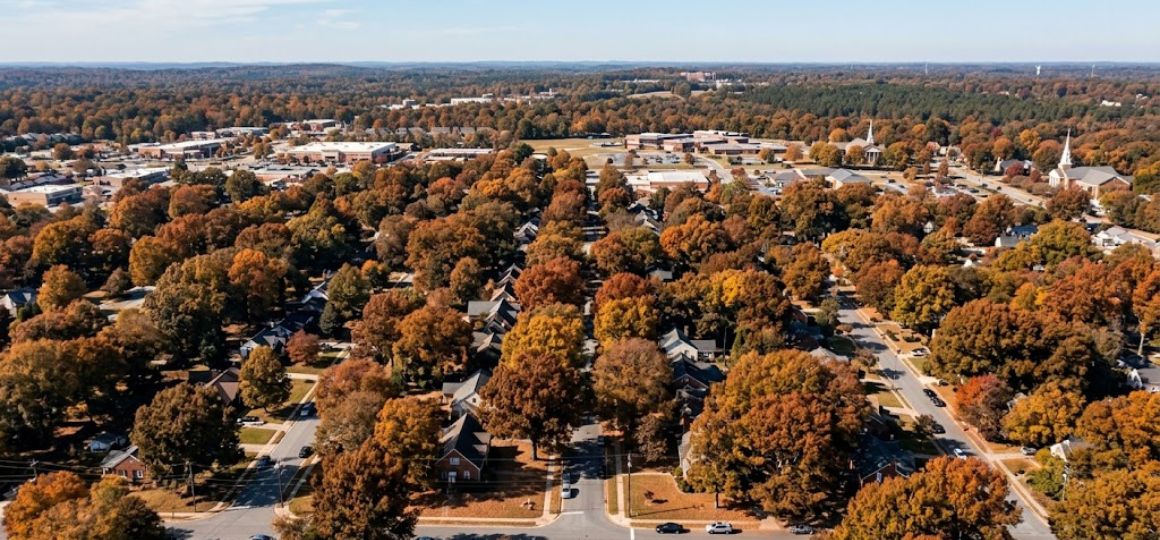
The climate factor, why Greensboro's winters don't give rodents a pause
Rats breed year-round too. They live in attics, walls, and crawl spaces.
Fall is the peak. Cool nights drive rodents indoors.
Winter stays mild here. Most days stay above freezing.
The infrastructure factor: storm drains, alleys, and the sustained colony network
Spring brings new young. Population doubles or triples by summer.
Summer slows entry a bit. But existing rodents keep breeding.
So the right plan is year-round. Seal in fall. Trap if active.
The housing factor, aging crawl-space stock and mature hardwood canopy
Most homes need one round of work plus a follow-up in 6 to 12 months.
Programs run on a route. Bait stations checked monthly.
Seasonal intensity versus baseline, understanding the fall spike
Year-round pressure doesn't mean uniform pressure. Greensboro does have seasonal variation. It's just variation in intensity on top of a year-round baseline, not a seasonal on/off cycle. The fall spike (September-December) is real: roof rats migrate from cooling canopy toward warm attics, Norway rats increase indoor foraging as outdoor food declines, and house mice seek warmth as temperatures drop. This is when most first-call rodent checks happen.
But the underlying group that produces the fall spike is active year-round. A Norway rat colony in a Greensboro crawl space in July is smaller and quieter than in October. But it's present. A roof-rat pair in an Irving Park attic in February is less active than in November. But it's there. The year-round baseline is why jobs in any month is valid, and why sealing, the specific fix, is equally important still of when in the year a problem is discovered.
What this means for Greensboro homeowners and property managers
Three practical implications. First, the best time to inspect and seal is not "when you have a problem". It's before fall pressure peaks. An August or September check of crawl-space vents and roofline entry points that finds and seals gaps before the October influx is far more efficient than a November rush call after roof rats are already set up in the attic.
Second, jobs without sealing produces short-term outcome in Greensboro's year-round-pressure spot. The replacement group arrives faster here than in colder climates. The source group is never fully suppressed by weather. Sealing is the specific parts. Trapping is the acute-group management parts. Both are needed.
Third, for property managers and landlords in high-pressure neighborhoods: year-round pressure means year-round check value. A pre-move-in inspection in February is as useful as one in September. Because the entry points that need to be logged and sealed are open and exploitable in every month. Call (844) 635-0403 if you'd like to discuss a preventive check program for your homes.
How Greensboro compares to peer metros, how its year-round pattern compares
Most North Carolina cities have noticeable seasonal rodent cycles. Greensboro's is flatter than most. Comparing across peer metros within 200 miles helps clarify what's set to Greensboro and what's area:
Charlotte has a more pronounced spring/fall double peak with quieter summers, driven by Charlotte's denser shop cores, more aggressive municipal pest management on setup, and lower mature-canopy density in newer development areas. The summer dip lets Charlotte homeowners and owners take a breath. Greensboro's doesn't.
Raleigh-Durham trends toward a single dominant fall peak with pretty quiet winters and springs. The Triangle's newer housing stock (much less pre-1940 housing than the Triad) and tighter envelope build creates fewer frame entry points. So The group pressure manifests as a sharper but shorter seasonal event rather than sustained work.
Winston-Salem looks more like Greensboro, similar housing-stock profile, similar canopy density, similar year-round pattern. Winston-Salem owners notes the same flat call-volume distribution we do. The Twin City pattern is mainly the same as the Greensboro pattern. They're a peer market.
AshevilleHas a different pattern entirely. Much sharper fall peak driven by mountain-area cold snaps that push outdoor population toward structures more aggressively than the Piedmont's milder transitions. Asheville winters do give a rodent pause in a way Greensboro's don't.
The takeaway: Greensboro homeowners shouldn't take advice from Charlotte or Raleigh pest control content and think it applies. The seasonal protocols are different. Our year-round pattern means steady low-grade vigilance matters more than seasonal panic responses, and budget planning should think rodent expenses can occur in any month, not just October-December.
The micro-climate effect, why some Greensboro neighborhoods feel year-round pressure more than others
Within Greensboro itself, the year-round pressure isn't evenly distributed. Three micro-climate factors create local intensification:
Downtown urban heat island. The downtown core and right away surrounding neighborhoods (Aycock, College Hill, Glenwood east of Lawndale) run measurably warmer than outer suburbs through winter, the combination of dense pavement, building heat retention, and reduced canopy cover creates a 3-5°F average winter-night temperature differential. For rodent population, that differential is large. It extends breeding work later into the fall and starts spring work earlier. Downtown-adjacent neighborhoods see less of a winter pause than outer suburbs even compared to the rest of the Greensboro pattern.
Creek and stream corridors. Homes along North Buffalo Creek, South Buffalo Creek, Reedy Fork, and the smaller tributaries through Latham Park, Lake Daniel, and parts of Hamilton Lakes have year-round Norway rat pressure tied to the riparian corridors themselves. Norway rats use waterway edges as travel paths and burrow into bank vegetation through every season. Homes within 300 feet of these corridors face elevated baseline pressure still of month.
Mature canopy roof rat zones. Irving Park, Fisher Park, Sunset Hills, and parts of Old Irving Park have set up roof rat population that the canopy supports year-round. Roof rats are more cold-tolerant than Norway rats and continue active behavior in attics in winter months when ground-dwelling group slow. The "winter pause" that does exist in most of Greensboro's rodent work barely affects roof rat population in these neighborhoods.
How fast rodent numbers can grow
NC State Extension's rodent guidance puts numbers on why a small, unnoticed problem can feel sudden. Mice can breed at 6 to 10 weeks old and have 5 to 10 litters a year, with up to 6 mice per litter. Rats breed at about 3 months, have 4 to 6 litters a year, and can have up to 12 young per litter. As the guide puts it, just a few rats or mice can become many within a year or two.
Extension also notes that rodents are nocturnal and gnaw constantly to wear down their teeth, which is how they damage insulation, timbers, water lines, and wiring. Rats can jump as much as 36 inches straight up and mice as much as 12 inches, so shrubs, stacked items, and limbs near the house matter. Monitoring, sanitation, and exclusion work in any season.
Source: NC State Extension (Henderson County), House Mice and Other Rodents
Related services
For year-round Greensboro rodent control, the most relevant ongoing service type are:
Dealing with rodents in Greensboro or Guilford County?
If you need help with this in Greensboro, we offer free inspections, same-day service where available, written quote before any work starts. Open 24/7.
Call (844) 635-0403